Plato
Ancient Greek philosopher · c. 429–347 BCE
Who they were
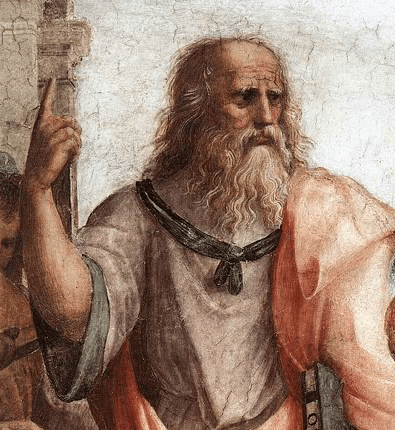
Plato (Greek: Plátōn) was an Athenian philosopher, a student of Socrates, and the founder of the Academy in Athens. Aristotle studied there. Plato wrote most of his philosophy as dialogues, letting the argument unfold through conversation, disagreement, and questions.
Best known for
The Republic, the allegory of the cave, and the theory of Forms. In the cave, people who have only ever seen shadows take them for reality. Plato uses that image to ask what changes when education teaches someone to examine what they thought they already knew.
Major works
Republic
What is justice, and why should a person live justly? Book VII contains the cave allegory and the discussion of education as a change in what the mind is directed toward.
Apology
Plato’s account of Socrates defending himself at his trial in Athens. Start here for Socrates’ argument for an examined life.
Symposium
A dinner party turns into a series of speeches on love, including Diotima’s account of how love can lead someone from a particular attraction toward a larger understanding of beauty.
Phaedo
Set on Socrates’ last day, this dialogue asks what philosophy prepares a person for and whether the soul survives death.
Timaeus
An account of the origins and order of the cosmos, delivered largely as a speech by Timaeus.