Socrates
Classical Athenian philosopher
Who they were
Socrates (c. 469–399 BCE) made philosophy a public conversation in Athens. He tested claims about virtue, justice, and knowledge by asking people to explain what they meant and follow their answers to their consequences. Athens convicted and executed him in 399 BCE. No writings by him survive, and the portraits left by Plato, Xenophon, and Aristophanes are not interchangeable.
Best known for
Question-led inquiry, the examination of moral beliefs, and the enduring problem of separating the historical Socrates from his portrayals.
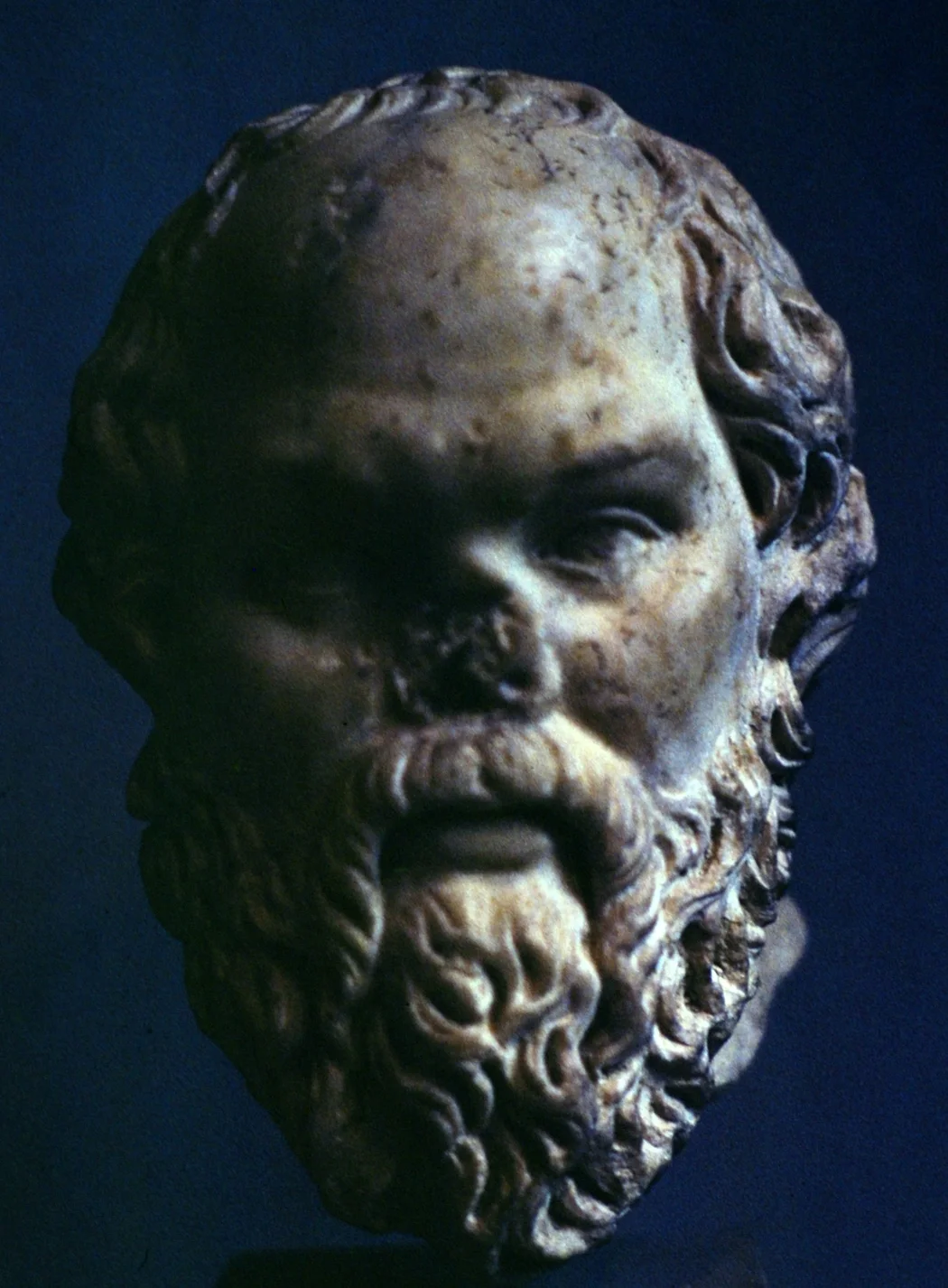
Accounts of Socrates
Apology, by Plato
Plato’s account of the defense Socrates gave at his trial, and of why he refused to give up questioning his fellow citizens.
Euthyphro, by Plato
A dialogue that tests proposed definitions of piety and asks what makes an act worthy of approval.
Memorabilia, by Xenophon
A different ancient portrait of Socrates, written to defend his character and show how he advised the people around him.