What Is a Legacy Brand?
PerspectiveSource AIS EmpireBy Sitani Mafi
Picture your great-grandchild knowing your face, your name, and none of the reasons you lived that way. A beautiful portrait. Terrible instructions.
A legacy brand is a symbol of power built to bleed into the next generation carrying on your memories and teachings.
Power means your hard-won knowledge still works when you are no longer in the room. Otherwise, you leave them the statue and hide the toolbox.
One missing detail can cost another generation
Imagine a grandfather turning down a business partnership. The money looks good. The contract puts his family's home on the line. He walks away.
Years later, his grandson considers a deal of his own. If all he hears is that Grandad never trusted partners, he inherits a fear of people. If he hears why the contract was dangerous, he inherits a way to judge the risk. Same grandfather. Very different inheritance.
This is how a lesson becomes a superstition: the conclusion survives, the conditions disappear. Your descendants inherit the fear without the reasoning. Then somebody pays for the lesson again, with interest.
A family tree should carry more than names
A name on a branch tells you who came before you. Follow it into a decision, a mistake honestly explained, and that person can help you think.
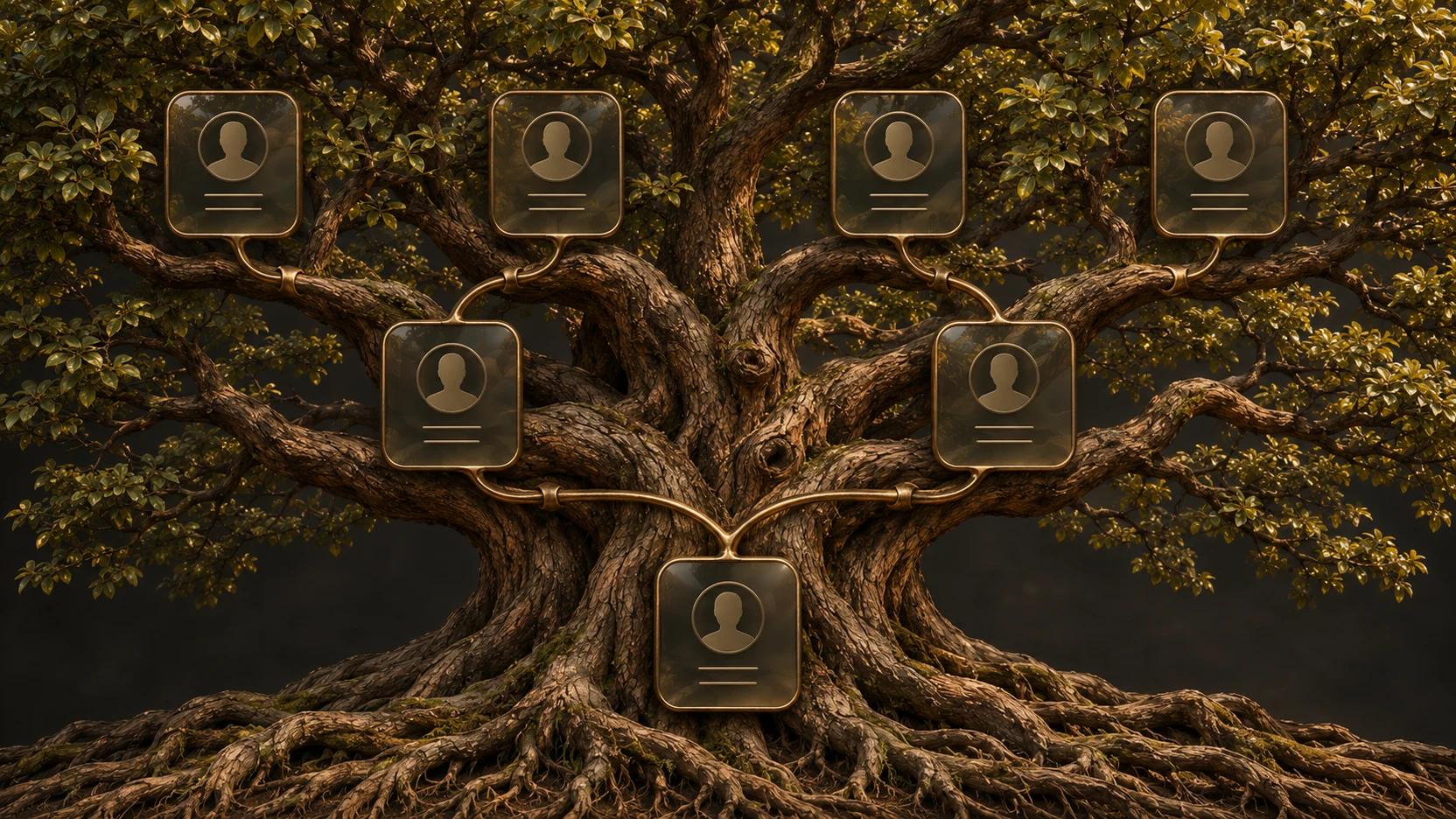
That is the idea behind a family legacy tree: profiles connected to original stories and teachings. The roots hold context. The trunk preserves the record. New branches get to grow toward their own light.
The brand makes that knowledge easier to find. Without something useful behind it, a family crest labels an empty cupboard.
The words survived. Did the meaning?
Even the Bible reaches us through human hands: copying, translation, interpretation. Ancient manuscripts such as Codex Sinaiticus carry corrections. That does not prove a lesson was ruined; it reminds me of the responsibility between a message and its next reader.
Your family has its own interpreters. Someone remembers the warning and forgets the tenderness. Someone celebrates the victory and quietly removes the mistake that made it possible.
Keep the part you wanted to edit out
Record one lesson you earned the hard way: what happened, what you decided, why, and what would change your answer. Include the embarrassing part. It may be the only useful thing missing from the polished version.
Date and approve the original. Keep revisions separate. Decide who can see it, who maintains the backups, and who takes responsibility next. An archive nobody can open is just a secret with hosting fees.
AI can help organize and search it. It can also confidently explain something you never meant. Keep summaries linked to approved originals, and let a person check the important answers. Your surname is not a fact-check.
Give them your thinking. Leave them their choice.
Legacy hides a temptation: remaining in charge after we leave. Resist it. Your descendants deserve to understand you without being required to become you.
They should be able to hear the original, test it against their circumstances, and disagree without rewriting your words. The branch can change direction without pretending the roots were somewhere else.
Before building another page about your success, decide what someone you love should never have to learn from scratch. Give that knowledge a home. Leave the next generation something better than a name to live up to.
Questions worth asking
How is a legacy brand different from a personal brand?
A personal brand makes your work recognizable today. In this approach, a legacy brand also gives future generations access to the memories and thinking behind it.
Can it stop family knowledge being distorted?
No brand can guarantee that. Approved originals, context, version history, backups, and a responsible steward make errors easier to find and correct.
Do I need to be wealthy to build a legacy brand?
No. Begin with one lesson worth preserving, recorded in your own words with its context. Wealth is not the entry requirement for having something useful to pass down.